








When moving heavy appliances, use a slower plan than for regular furniture. Weight is only one part of the job. Each machine has internal parts, connection points, finishes, doors, hoses, racks, cords, and manufacturer instructions that affect how it should leave the home.
At Special Force Movers, we treat appliance preparation as part of safe moving, not as a last-minute task beside the truck. Proper preparation helps protect the appliance, the floor, the walls, the moving crew, and the new property. It also reduces the chance of leaks, loose parts, surface damage, and setup problems after delivery.
Plan the Appliance Move Before Anyone Lifts
Good appliance moving begins before the dolly reaches the kitchen or laundry room. The first step is to confirm which appliances are moving, which ones are staying, and which ones need professional disconnection before the moving crew arrives. A refrigerator with a water line, a gas dryer, a gas range, a dishwasher, and a washer all need different preparation.
The appliance manual should guide the final steps. Manufacturer instructions often explain how to disconnect, clean, secure, transport, and restart the unit. If the manual is missing, search the model number online or contact the manufacturer. Moving advice should never override appliance-specific instructions, especially for refrigerators, washers, gas appliances, and built-in units.
Separate Moving Work From Trade Work
Movers can handle lifting, carrying, loading, transport, and placement. They should not replace licensed trades when an appliance needs gas, electrical, or plumbing work. A gas range or gas dryer should be disconnected and reconnected by a qualified professional. A dishwasher or built-in appliance may also need a plumber, electrician, or appliance technician, depending on the setup.
This separation protects the customer and the crew. A moving team can safely move a prepared appliance, but trade connections carry different risks. Gas leaks, water leaks, electrical issues, and damaged shutoff valves can create problems that go far beyond the move itself. Arrange those services early, so the appliance is ready before moving day.
Prepare Refrigerators and Freezers With Enough Time

A refrigerator needs time before it is ready for transport. Empty the food, remove loose shelves and bins, disconnect any ice maker or water line, and clean the interior. If the freezer has ice buildup, allow enough time for defrosting and drying before the movers arrive. Moisture left inside can lead to odour, drips, and mess during transport.
Keep the doors slightly open after cleaning so the interior can dry. Tape should not go directly on delicate finishes if it can leave residue or marks. Shelves, drawers, and bins should travel separately or stay secured according to the manufacturer’s instructions. A refrigerator should stay upright during transport whenever possible, and the restart timing should follow the appliance manual after delivery.
Give Laundry Appliances Special Attention
A washing machine carries more hidden risk than many people expect. Water can remain inside hoses, pumps, and the drum area. Disconnect the water supply, drain the hoses, and give the machine time to dry. Keep hose ends controlled so they do not drag, leak, or scratch surfaces during the move.
Front-load washers often need transit bolts or shipping bolts to secure the drum during transport. Without them, internal movement can damage the machine. If the original bolts are gone, contact the manufacturer or an appliance parts supplier before moving day. A washer should never be used again until those bolts are removed after delivery.
Prepare Dryers Without Ignoring the Vent
A dryer should be cleared of lint before moving. Clean the lint trap, check the area behind the unit, and carefully disconnect the vent. The vent hose can tear, be crushed, or trap lint, so inspect it before deciding whether to reuse it at the new home.
Gas dryers need qualified disconnection and reconnection. Electric dryers require the cord to be managed safely after unplugging. Once the dryer is ready, the crew can protect the exterior and move it with the right equipment. During delivery, the vent path should be checked before the dryer is returned to use.
Handle Dishwashers and Ranges With Care
Dishwashers need more preparation than a simple unplugging. The water supply, drain connection, mounting hardware, and electrical connection all need proper attention. A dishwasher should be emptied, cleaned, drained, and dried before moving. Racks and loose parts should stay secured or travel separately.
Ranges require different plans based on fuel type. Electric ranges should be unplugged and cleared of racks, trays, and loose parts. Gas ranges need professional disconnection before movers handle them. Doors should remain controlled during transport, and glass surfaces or control panels should be properly protected.
Measure the Route Before Moving Heavy Appliances
Doorways, stair turns, hallway width, elevator size, thresholds, and tight corners all affect the carry path. Before moving heavy appliances, measure the appliance and the route out of the home. Guessing at this stage can lead to delays, damaged trim, scraped floors, or an appliance that cannot be moved out of the room safely.
The route should be cleared before the crew arrives. Remove rugs, shoes, small tables, bins, pet items, and anything that narrows the path. If a door needs to come off its hinges, plan that before lifting begins. A few minutes of preparation can prevent a long struggle with a heavy appliance in a tight space.
Protect Floors, Walls, and Appliance Surfaces
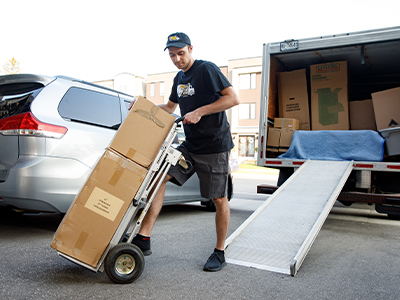
Large appliances carry their weight through small contact points. A refrigerator wheel, washer foot, or range corner can damage flooring when the item is moved. Floor runners, sliders, appliance dollies, and controlled lifting help protect the property during the move.
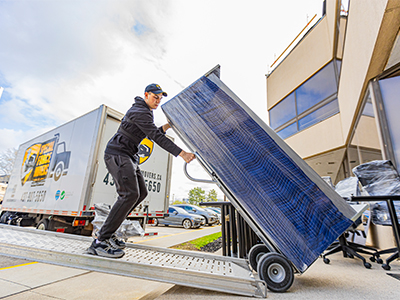
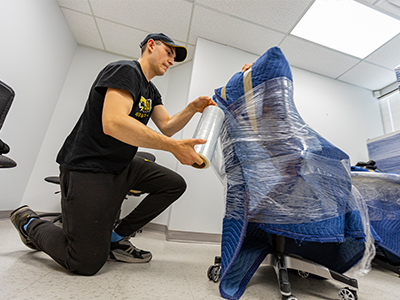
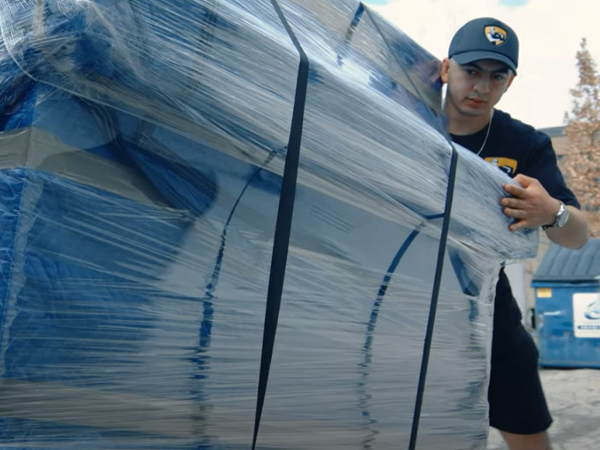
The exterior finish also needs care. Stainless steel, painted panels, glass fronts, and control surfaces can easily scratch or dent. Moving blankets and straps should be placed with attention to pressure points. The goal is to hold the appliance securely without damaging doors, handles, screens, knobs, or trim.
Keep Cords, Hoses, Doors, and Hardware Controlled
Loose parts create problems during transport. Power cords should be secured without sharp bends. Water hoses should stay drained and contained. Screws, brackets, shelves, racks, filters, and small hardware should go into labeled bags. Those bags should be transported in a safe place where they will not be lost during unloading.
Doors need control as well. A refrigerator, dishwasher, dryer, or range door should not swing open while the appliance is being moved. Use a method that protects the finish and follows manufacturer guidance. Avoid aggressive tape on painted, stainless, or delicate surfaces. A soft tie, stretch wrap over padding, or another finish-safe option usually works better.
Load Appliances With Balance in Mind
Appliances should be transported in a way that supports their weight and protects their internal components. Refrigerators, freezers, washers, dryers, ranges, and dishwashers all have different balance points. The crew needs to control the tilt, secure the item, and load it to prevent shifting during transport.
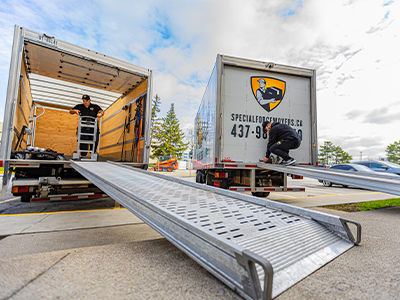
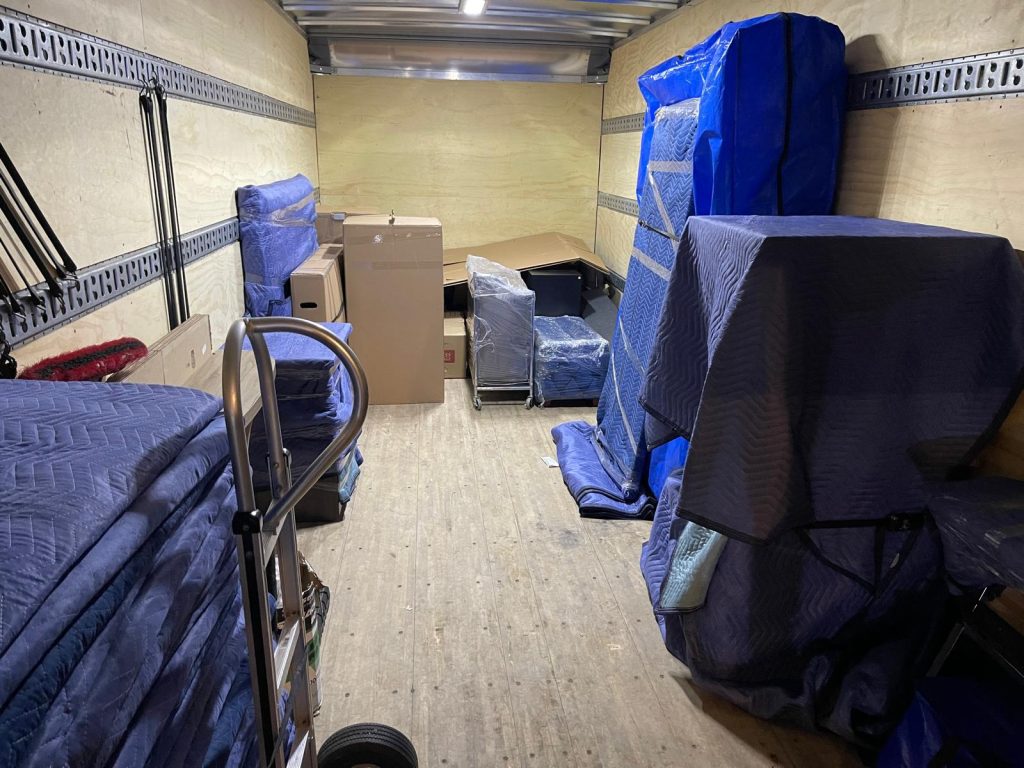
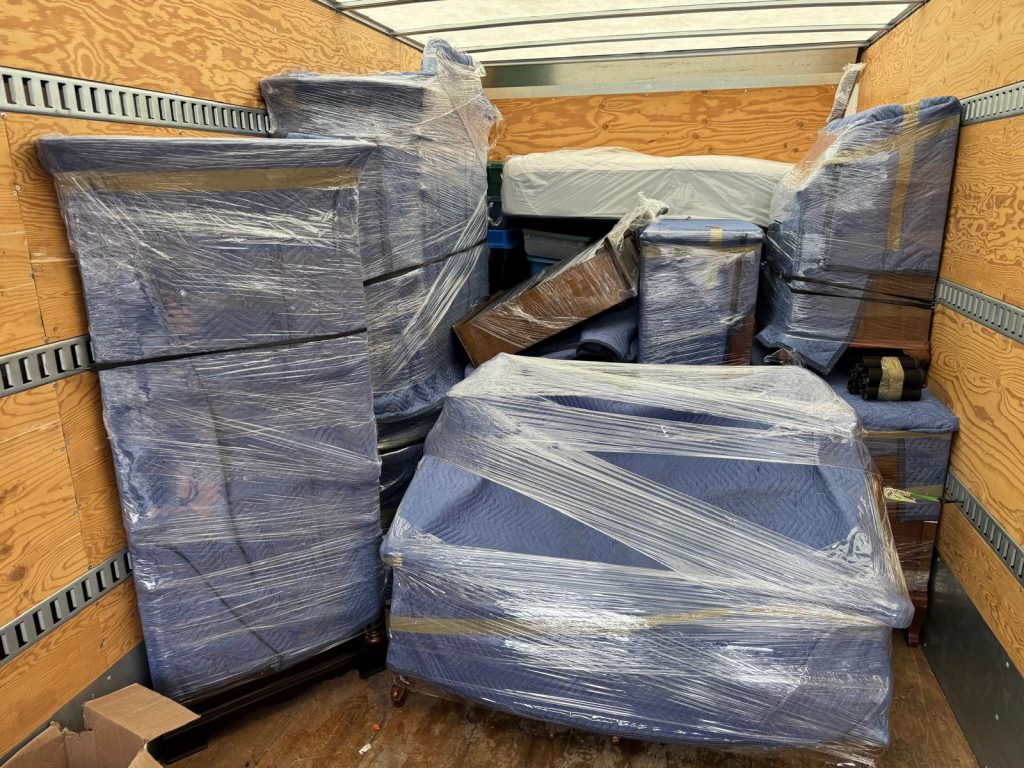
During appliance moving, the truck setup matters. Heavy appliances should not crush fragile items or be leaned against furniture that cannot withstand pressure. Straps help keep the appliance stable. Moving blankets protect contact points. Good loading reduces movement inside the truck and helps the appliance arrive ready for careful placement.
After Delivery, Let the Appliance Settle
The move is not finished the moment the appliance reaches the new room. Refrigerators and freezers often need settling time before use, especially if the unit was tilted during transport. Follow the manufacturer’s instructions before plugging the appliance back in. When in doubt, give it more time and check the manual.
Laundry appliances, dishwashers, and appliances with water connections should be checked carefully after reconnection. Watch for leaks at hoses, valves, and drain points. Make sure washers sit level before use. A machine that rocks during the first cycle needs adjustment before it causes damage or moves out of position.
Know When to Ask for Help
Some appliance moves are manageable with the right preparation and a trained crew. Others need trade support before or after the move. Gas appliances, built-in dishwashers, water-connected refrigerators, heavy laundry pairs, and appliances in tight stairways deserve extra planning.
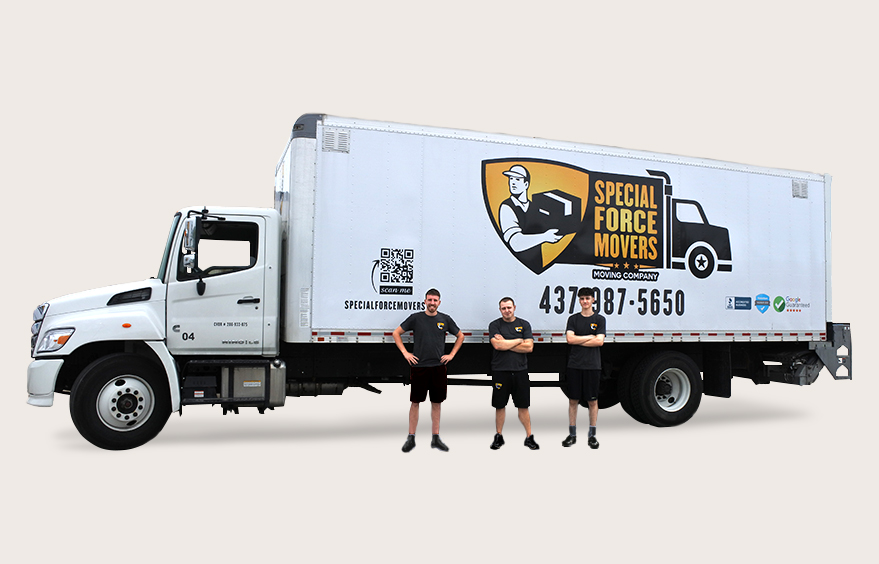
Special Force Movers can help with moving heavy appliances once they are safely disconnected and ready for transport. We can protect the appliance, carefully move it through the property, load it securely, and place it at the new address. For any gas, plumbing, electrical, or manufacturer-specific setup, arrange the right qualified professional before moving day.
Final Appliance Moving Check
Before the crew arrives, confirm that each appliance is empty, clean, dry, disconnected, and ready to move. Keep manuals, hardware, hoses, shelves, and accessories organized. Clear the path and inform the moving team of any tight turns, stairs, elevators, fragile flooring, or appliances that require extra care.
A careful preparation plan protects more than the machine. It protects the property, the schedule, and the people handling the move. When appliances are ready before the truck arrives, moving day runs more smoothly, with better control from the first lift to final placement.